
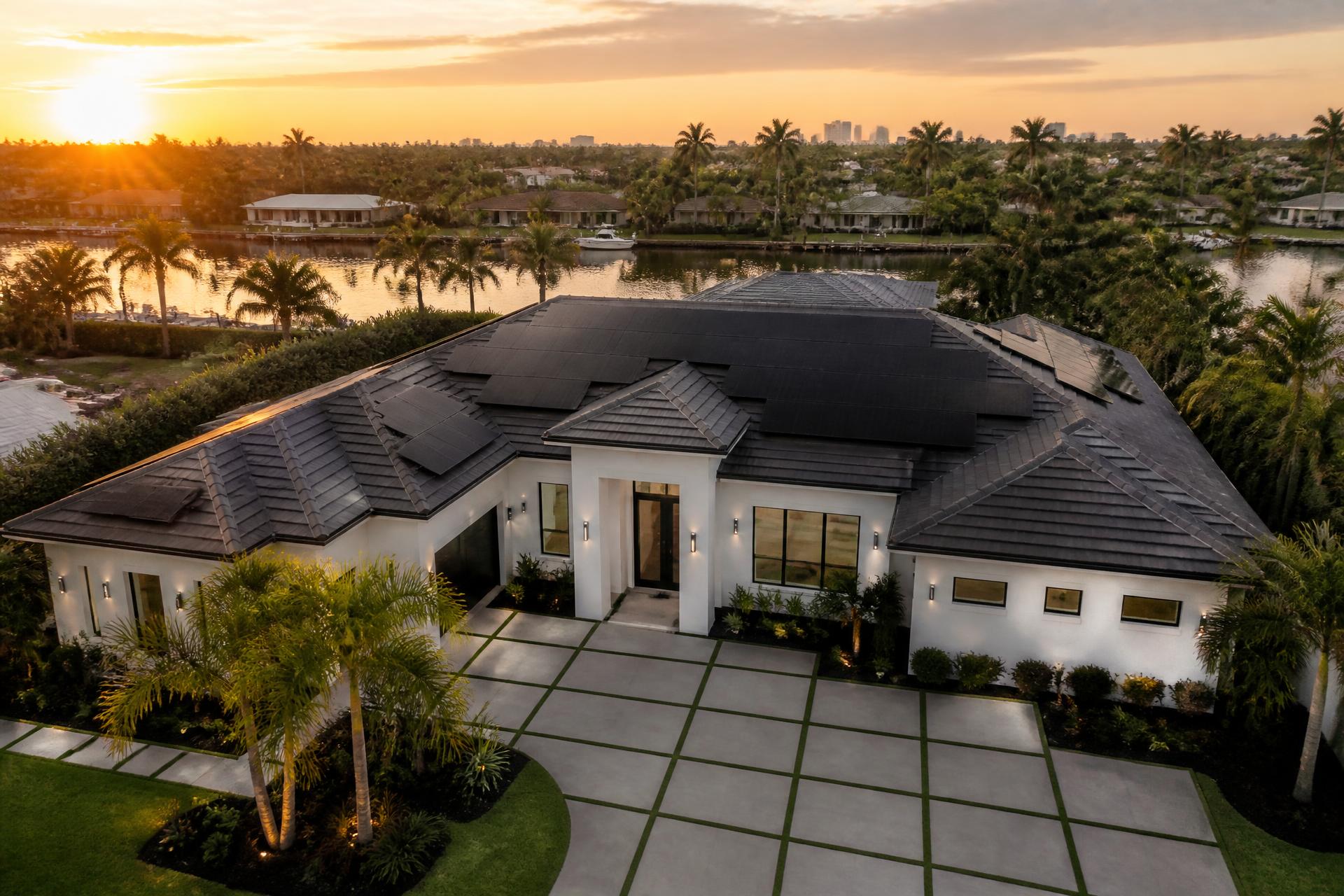
Solar · The engine of the plan
Turn Florida sunshine into home energy.
Your roof already receives more energy than your home uses. Solar is simply the equipment that captures it, and a well-designed system starts with understanding the home underneath it.
The solar sequence
From sunlight on the roof to power in the house.
Seven stages, one system. Step through them to see how each part of the home takes part, the same cross-section used everywhere else on this site.
Swipe to move through the stages
Stage 01 · Sunlight
The energy is already arriving
South Florida roofs receive sunlight most of the year. Nothing has to be created. The question is only how much of it your home can capture and use.
Illustrative only. Actual layout, equipment and behavior depend on your home and utility.
System design
Seven inputs decide what your system should be.
A solar design is the output of what we find at your home. Select any input to see what we look at and how it changes the design. We publish no production or savings figures here. Those come from your assessment.
Electricity consumption
How much power does the home actually use, and when?
Twelve months of utility history shows the seasonal shape of your usage: not an average, but the peaks that matter.
Effect on the design
Sets the baseline the system is designed against. Everything else adjusts it up or down.
What we collect
- Monthly kWh history
- Seasonal peaks
- Time-of-day patterns
- Planned additions (EV, pool, addition)
Why solar
More control over what you pay for power.
When you generate your own electricity, a portion of what your home consumes no longer has to be purchased from the utility at whatever rate applies that year. That's the real value: reducing dependence on utility-supplied power and gaining more predictability over long-term energy expenses.
Solar is a long-lived home improvement. That's exactly why we won't design one on top of a roof near the end of its life, or size one around cooling waste that a better AC system or attic insulation could remove first.
Incentive programs, tax credits and rebates change over time and eligibility depends on your specific situation. We do not publish incentive figures on this site. Ask us to review what currently applies to you, and confirm with a qualified tax professional.
Designed around your usage
Twelve months of consumption tells us more than square footage ever will.
Sized for your roof
Usable planes, orientation and shading set the realistic ceiling for production.
Sequenced with roof work
If the roof needs attention, it gets handled first, as part of the same plan.
Load reduced first
Lower waste can mean a system sized for the home you'll have, not the one you have today.
How Eco Hive designs solar
Ten steps from first look to activation.
Nothing here is a template. Each step feeds the next, and the design isn't final until the home has been assessed.
- 01
Energy usage analysis
We start with how your home actually consumes electricity across the year, not an average.
- 02
Roof analysis
Material, condition, remaining service life and usable roof planes.
- 03
Sun exposure
Orientation, tilt and shading determine how each roof plane performs.
- 04
System sizing
The system is designed around your usage and goals, not a package tier.
- 05
Equipment selection
Components are matched to your roof type, layout and long-term plans.
- 06
Engineering
Structural and electrical design prepared for permitting review.
- 07
Permitting
We handle the local jurisdiction and utility paperwork required for your project.
- 08
Installation
Our crews install to plan and protect the roof they're working on.
- 09
Inspection
The system is inspected as required before it can be energized.
- 10
Activation
Once approved, your system is activated and you're walked through monitoring.
The solar assessment
We analyze the home before we talk about panels.
A quote produced before anyone has looked at your roof, your attic and your usage isn't a design. It's a guess with a price on it. The Eco Hive assessment exists to replace that guess.
What we look at
Electricity usage, roof condition and remaining life, sun exposure, attic and insulation condition, HVAC age and efficiency, and your goals for the home.
What you receive
A clear explanation of what your home needs, which improvements actually strengthen the solar plan, and which ones can wait.
What we won't do
Publish savings percentages, promise incentive eligibility, or push equipment before the home has been evaluated.
Solar plus the rest of the home
Three things that decide how well your solar performs.
Solar + Roof
Panels are meant to stay in place for decades. If the roof beneath them has only a few years left, removing and reinstalling the array later adds cost and disruption. We evaluate roof condition first so the sequence is right.
Roofing →Solar + HVAC
An aging or inefficient air conditioning system can consume more electricity than it needs to. That extra consumption doesn't disappear when you add solar. It just means you need a larger system to cover it.
HVAC →Solar + Insulation
A hot, poorly insulated attic pushes heat into the living space, so the AC runs longer. Improving insulation can reduce unnecessary cooling demand before you size a system around it.
Insulation →Financing
Paying for solar over time.
Financing options may be available to qualified homeowners for solar and related home improvements. Approval, rates and terms depend on the lender and your individual situation. We can't promise any of them in advance.
Eco Hive does not publish tax credit percentages, rebate amounts, payback periods or savings figures. Incentive programs change and eligibility depends on your specific circumstances. Ask us to review what currently applies to your home, and confirm any tax treatment with a qualified tax professional.
Solar FAQ
The questions homeowners actually ask.
Ready to see what solar looks like on your home?
Start with the assessment. We'll review your usage, your roof and your home, then show you the plan that actually fits.